
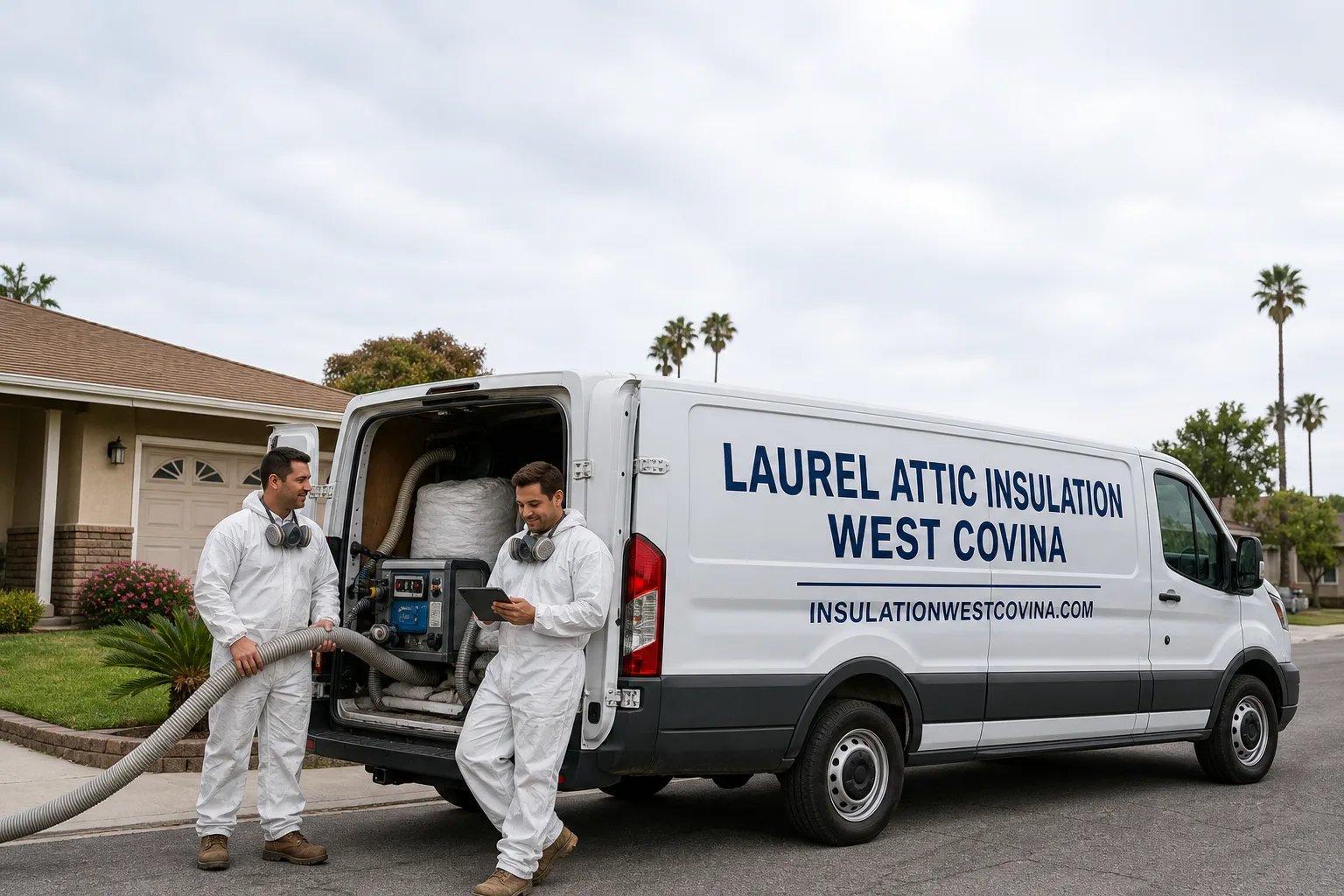
Fast, Reliable Attic Insulation Across El Monte
Attic insulation in El Monte typically costs $900 to $3,400 depending on attic size, R-value target, and the condition of what’s already up there. Most jobs are completed in a single day. If you’re feeling heat radiate through your ceilings by early afternoon or your AC runs nonstop from July through September, the problem isn’t your air conditioner. It’s what’s missing above it.
We’re Laurel Attic Insulation West Covina, and our crews work throughout El Monte every week. We know the tract homes south of Valley Boulevard near the Rio Hondo, the older neighborhoods around Mountain View and Arceo Park, and the pocket of newer construction north of the 10. When you call (831) 531-5104, you’ll reach a live person who can schedule a free attic inspection, usually within a day or two. Not a call center. Not a callback queue.
Why Laurel Attic Insulation West Covina Is El Monte’s Preferred Attic Insulation Company
El Monte’s attic insulation needs are shaped by one thing more than anything else: the city’s housing stock. Most homes here were built between 1940 and 1975. They’re single-story ranch houses with stucco exteriors, wood framing, and low-slope roofs. Many still have the original attic insulation installed at construction, and after 50 or 60 years of Southern California heat, AC retrofits, and roof work, that insulation isn’t doing much anymore.
Our Attic Insulation team has worked in hundreds of these homes. We understand how a 1960s El Monte attic differs from a 1990s tract house in Rancho Cucamonga or a newer build in Chino. The framing is different. The ventilation is different. The access hatches are smaller. The wiring and ductwork have been modified over decades. You can’t treat these attics generically, and we don’t.
Every job comes with the Relay Visibility Guarantee: a written price before work starts, live technician tracking on the day of service, and before-and-after photos of your attic delivered to your phone. Our 365-Day Done Right Promise backs the workmanship in writing. If something isn’t right, we return and fix it. No charge, no argument.
Attic Insulation Removal in El Monte
Attic Insulation Removal in El Monte is, frankly, the service many of these older ranch homes need before any new insulation goes in. We remove the old material, bag it, and haul it away, then prep the attic for fresh blown-in insulation or batts. In El Monte, a full removal typically runs $1,000 to $2,200 depending on attic square footage and how much material is up there.
Why remove what’s already in place? Because in most mid-century El Monte attics, the original insulation has been compromised beyond salvage. Decades of AC service calls, electrical work, and roof repairs have trampled the original fiberglass batts flat. A batt compressed from its original 6-inch loft down to an inch or two retains only a fraction of its R-value. Leaving it in place and just adding new insulation on top doesn’t fix the problem. It buries it.
Signs Removal Is the Right Call
If your attic has original kraft-faced batts that are dark, paper-backed, and clearly stomped down in the traffic path from the access hatch to the furnace, removal is usually the best option. Same goes if you’ve had rodents up there once upon a time, or if an old roof leak left stains on the insulation. Those materials trap odors and can hold moisture long after the leak is fixed.
During removal we also spot things that need attention before new insulation goes in: old knob-and-tube wiring fragments, disconnected duct joints, bathroom fans venting directly into the attic. Fixing those before re-insulating makes the new material work the way it should.
Air Sealing Before Re-Insulation
We recommend air sealing whenever we remove old insulation in El Monte. The top plates of your interior walls, around can lights, plumbing penetrations, and flue chases are all routes for conditioned air to escape into the attic year round. Sealing them with foam or caulk before blowing in new insulation can cut your home’s energy loss by 15 to 20 percent on its own. It’s the difference between a good insulation job and a great one.
Blown In Insulation in El Monte
Blown In Insulation in El Monte is our most common installation method for these older ranch homes, and it typically costs $1,200 to $2,800 for a full attic after removal and air sealing are complete. We blow loose-fill fiberglass or cellulose to the exact depth required to hit your R-value target, usually R-38 or R-49 for this climate zone.
Blown-in material fills the irregular cavities of a 1960s El Monte attic better than batts ever could. Low-slope roofs create tight corners and shallow edges where batts don’t fit cleanly. Loose fill settles into every gap around ductwork, plumbing vents, and electrical boxes. It eliminates the gaps and compression that hand-cut batts always leave behind.
Fiberglass or Cellulose for El Monte Attics
We install both GreenFiber cellulose and Owens Corning blown fiberglass in El Monte homes, and the choice depends on your attic. Cellulose packs tighter and blocks airflow better, which matters in older attics with lots of small leaks. Fiberglass is lighter and easier to work with in certain framing configurations. For most mid-century El Monte ranch attics, we lean toward GreenFiber cellulose because it resists air movement and fills those irregular spaces more completely.
What R-Value El Monte Homes Actually Need
The Department of Energy recommends R-38 to R-49 for attics in our climate zone. R-value, by the way, is just the number that measures how well insulation resists heat moving through your ceiling. Higher number, slower heat transfer. Most El Monte homes built in the 1950s and 60s have somewhere between R-5 and R-11 remaining. Some have even less. Blowing to R-38 changes how your home feels from the first afternoon.
Trusted Brands We Service in El Monte
We’re not tied to one manufacturer. We install Owens Corning fiberglass, GreenFiber cellulose, and Johns Manville products in El Monte attics every week, plus material from Knauf when a job calls for it. The brand gets matched to your attic’s specifics and your budget, not whatever happens to be on the truck. Our crews stock enough material to handle most El Monte jobs same-day, with no need to run back to the supplier mid-project.
Common Attic Insulation Problems We See in El Monte Homes
- Trampled original fiberglass batts. In tract homes built between 1940 and 1975, the original batts have been walked on, stacked, and displaced by generations of AC and electrical technicians. Compressed batts lose most of their thermal resistance, leaving exposed sheetrock against the roof deck.
- Degraded kraft-paper facing. Those original paper vapor retarders disintegrate over time. When they fail, moisture moves into the attic freely, and during winter cold snaps in the San Gabriel Valley you can end up with mold on the underside of the roof sheathing.
- Uninsulated stucco walls. El Monte’s older homes rarely have wall insulation. Even with a properly insulated attic, bedrooms still run hot in summer and cold in winter because heat moves through the stucco and framing directly. Attic insulation helps, but it’s a real limitation these homes share.
- Low-slope roof thermal bridging. The roof pitch on mid-century El Monte ranches creates shallow attic edges where insulation depth drops to almost nothing. The ceiling near exterior walls stays warm in summer and cold in winter no matter how much material sits in the center of the attic.
Pricing for Attic Insulation in El Monte, CA
Here’s what you can expect to pay in El Monte for common attic insulation scenarios. Attic insulation removal runs $1,000 to $2,200. Blown-in insulation after removal runs $1,200 to $2,800. An attic insulation top-up, where we add new material on top of serviceable existing insulation, runs $700 to $1,500. Batt insulation replacement for smaller attics runs $1,400 to $2,400. Attic baffle and vent prep adds $200 to $500 depending on your roofline.
Every quote is written. It’s delivered before work starts, and it doesn’t change at the door. Call (831) 531-5104 and we’ll schedule a free inspection, measure your attic, and send you a price you can read on your phone. No pressure. Just numbers.
What Makes El Monte’s Attic Insulation Different
El Monte’s insulation market is driven by its dense stock of 1950s to 1970s stucco and wood-frame ranch homes, many with original low-R-value fiberglass that barely registers as insulation by modern standards. The San Gabriel Valley’s summer swelter pushes attic temperatures well past 130°F, and when your ceiling insulation is shot, that heat transfers straight into your living space. Winter brings the opposite: nighttime temps in the 40s push heat up through the attic all night long.
In El Monte’s mid-century tracts, the original kraft-faced batt insulation in attic floors has often been trampled by decades of AC and electrical work, leaving exposed sheetrock against the roof deck. You can spot it easily on a summer afternoon: stand under a hallway or bedroom ceiling around 2 p.m. and feel the heat radiating down. That’s not just the sun. That’s a failed insulation layer.
Last July, our crew worked on a 1963 ranch on Rio Hondo Avenue where the homeowner felt heat radiating through the hallway ceiling by 2 p.m. We found the original Owens Corning fiberglass batts flattened to less than 2 inches by years of AC duct retrofits, with kraft paper facing disintegrated. After removing the old batts and air-sealing the top plates, we blew in GreenFiber cellulose to R-38, and the ceiling temperature dropped 12 degrees the next afternoon.
We Also Serve Cities Near El Monte
Our crews cover Attic Insulation in El Monte and the surrounding San Gabriel Valley communities, including Monterey Park, West Covina, Montebello, and La Puente. If you’re in one of those cities and your attic is showing the same signs we’ve described here, the service works the same way. Same crews, same written pricing, same 365-day promise.
Serving El Monte, CA - Our Local Coverage Area
We’re based in the El Monte area and know this community well. Use the map below to see our service coverage - if you’re nearby, we can almost certainly help.
FAQs About Attic Insulation in El Monte
You’ll feel it before you see it. If your ceiling is noticeably warm to the touch by early afternoon in summer, or if certain rooms run 8 to 10 degrees hotter than others in the same house, the insulation above those rooms has likely been compressed or displaced. The most reliable check is visual: open the attic hatch and look at the batts near the access point. If they’re flattened, dark, paper-faced, and clearly walked on along the path between the hatch and the furnace, the material above your ceilings is compromised. Call (831) 531-5104 and we’ll inspect it properly and give you a written price for whatever’s needed.
Almost always, yes. Low-slope roofs create shallow, tight attic edges where batt insulation cannot be installed at full depth without compression, and compressed batts lose R-value fast. Blown-in fiberglass or cellulose fills those shallow edges uniformly, settles into the irregular spaces around ductwork and framing, and eliminates the hand-cut gaps that batts leave. For most El Monte ranch homes built in the 50s, 60s, or 70s, blown-in material is the better fit.
In most cases, yes. Once that original kraft-facing has torn, deteriorated, or been trampled into the attic floor, leaving it in place creates moisture and mold risk and wastes part of your new insulation’s effectiveness. We sometimes can add new blown-in material on top of batts that are still in good condition and haven’t been walked on. But if there’s any sign of past roof leaks, rodents, or heavy foot traffic, removal is the right call. We’ll tell you which path makes sense after we see your attic, and we’ll price both options.
Two reasons. First, the original insulation installed in those homes was often minimal by today’s standards, usually R-11 or less, and it was never designed to last more than a few decades. Second, those attics have been through 50 to 70 years of AC retrofits, electrical upgrades, roof repairs, and rodent activity. Every one of those events means someone walked on, moved, or damaged the original batts. Combined with El Monte’s hot summers and cool winter nights, that legacy material degrades and underperforms in exactly the climate where you need it most.
Yes, and it’s usually the single most cost-effective energy upgrade for an El Monte ranch home. When attic temperatures hit 130°F and your ceiling insulation is at R-5 or R-8, heat pours through the ceiling and forces the AC to run constantly. Bringing the attic to R-38 or R-49 can cut upper-floor cooling costs by 15 to 30 percent depending on your home’s other characteristics. That’s not a guess. It’s the Department of Energy’s own estimate for this climate zone. You’ll feel the difference the same afternoon the job is done.
If your El Monte attic hasn’t been looked at in years, or you already know it needs help, call (831) 531-5104 and schedule a free inspection. We’ll give you a written price, a live arrival time, and photo proof of everything we do. Founded in 2003 and part of the Relay Home Co. family, Laurel Attic Insulation is the insulation specialist that treats your home the way you’d expect: with clear numbers, real guarantees, and no surprises.
Written by Chase Whitaker, Owner at Laurel Attic Insulation West Covina, serving El Monte and the San Gabriel Valley.